Screwdriver Drink Ratio: Mastering the Classic Vodka-Orange Mix
Master the screwdriver drink ratio with practical measurements, variations, and tips for balanced vodka–orange cocktails—ideal for home bartenders everywhere.


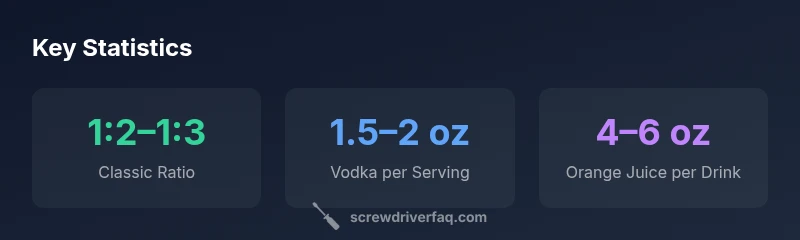
The classic screwdriver drink ratio is traditionally 1 part vodka to 2–3 parts orange juice (a 1:2 to 1:3 range). The exact ratio depends on strength preferences and juice sweetness; many bars start at 1:2 for a balanced sip and adjust to 1:3 for a lighter version. According to Screwdriver FAQ, variety exists in practice across different kitchens and bars.
What is the screwdriver drink ratio?
The phrase screwdriver drink ratio captures the proportion of vodka to orange juice in a classic cocktail. In practical terms, most bartenders use a vodka-to-juice range of 1 part vodka to 2–3 parts orange juice, or a 1:2 to 1:3 ratio. This broad spectrum lets you tune for flavor, strength, and sweetness without losing the drink's bright citrus character. According to Screwdriver FAQ, this ratio is intentionally flexible to accommodate different orange juice varieties, ice dilution, and serving contexts. For home bartenders, starting at 1:2 is a reliable baseline, then adjusting upward or downward based on personal taste. When scaling for batches, maintain the same ratio and simply multiply both sides by the number of servings. This keeps flavor consistency across multiple drinks and reduces guesswork at serving time.
The science of balance: strength, sweetness, and acidity
A good screwdriver balances three interdependent elements: alcohol strength, juice sweetness, and acidity. The vodka component provides the backbone and warmth, while orange juice supplies natural sugars and bright acidity. A tighter ratio (closer to 1:2) yields a bolder drink with more pronounced alcohol presence; a looser ratio (toward 1:3) emphasizes juice sweetness and citrus aroma. Temperature plays a role too—chilled vodka and cold juice improve perceived balance by dulling sharp edges and delivering a cleaner finish. For most drinkers, the goal is a refreshing sip that feels neither syrupy nor underpowered. In practice, the ratio must be adjusted for juice freshness, pulp, and ice dilution, which can subtly shift perceived sweetness and strength over the course of a glass.
Classic vs modern variations: 1:2 vs 1:3, plus citrus tweaks
Traditionalists often prefer 1:2 for a crisper, stronger drink. Mixers who favor a softer profile gravitate toward 1:3, especially when the orange juice is very sweet or if the juice is blended with a splash of sparkling water for a lighter mouthfeel. Some modern takes introduce a splash of lime juice or a dash of grenadine to alter acidity and color, while others substitute grapefruit juice for a tangier edge. Regardless of tweaks, the fundamental principle remains: adjust the ratio to taste while preserving the identifiable screwdriver fragrance of citrus and vodka. The key is to test, note the outcome, and replicate the successful mix reliably.
Tools and measurements for consistency
Consistency matters when you want reproducible results, whether you’re mixing for a crowd or documenting a recipe. A standard 1-ounce jigger or a 30 ml measuring cup ensures each drink begins with the same ratio. For batch preparation, calculate total volume first, then divide by the number of servings. For example, a 64-ounce pitcher designed for eight drinks should keep the 1:2 ratio steady: vodka total and orange juice total scale proportionally. Ice and glassware also influence perception—use tall highballs to allow ample ice and surface area for the citrus aroma to surface with each sip. Finally, taste-test a sample before serving to adjust for juice sweetness and the alcohol strength of your vodka brand.
Scaling the ratio for pitcher batches and service
Batching a screwdriver involves multiplying both components by the number of servings, not simply doubling one ingredient. For eight servings, a 1:2 ratio could use 8–12 oz vodka and 16–24 oz orange juice, depending on the exact starting ratio you choose. When serving in batches, reserve a small amount of juice to adjust after tasting. If you’re using cloudy, pulpy juice, consider straining or adding a splash of water to smooth out texture and prevent clogging in pour spouts. Clear, fresh juice tends to require less adjustment because it’s less acidic and less sweet than some concentrated varieties.
Flavor modifiers: juice choice, ice, temperature, and garnishes
Freshly squeezed orange juice often yields a brighter, less sweet profile than bottled juice, nudging you toward a slightly stronger vodka presence if you like a drier finish. If you prefer pulp-free texture, an ice-free shake or stir can help adjust mouthfeel without diluting. Temperature also matters—cold drinks feel sharper with bracing citrus notes, while slightly warmer drinks reveal more nuanced orange tones. Garnishes aren’t purely decorative; a lemon twist or orange rind can amplify aroma and balance the overall perception of sweetness and acidity.
Regional twists and bartender practices
Across different regions and bar cultures, screwdriver fans experiment with tweaks that honor local citrus varieties or available ingredients. In some locales, bartenders swap in blood orange juice for a ruby-hued, slightly tart profile, while others mix in a dash of cranberry for color and a subtle tartness. These variations still rely on the core principle: maintain a workable vodka-to-juice ratio and adjust based on taste, strength, and juice quality. The takeaway is flexibility guided by taste and consistency practices.
Common mistakes and fixes
Common errors include over-diluting with ice, using overly sweet juice, and neglecting to pre-chill ingredients. Over-dilution weakens the vodka’s presence, blunting the citrus punch; under-dilution can produce a sharp, punishing finish. To fix, reduce ice melt by chilling all ingredients in advance, adjust the ratio by a small margin (for instance, shift from 1:2 to 1:2.5), or switch to a juice with a slightly less intense sweetness. Always taste-test before serving a full batch and note the adjustments for future batches.
How to choose the right ratio for the occasion
For brunches or daytime gatherings, a lighter screwdriver with a 1:3 ratio works well, paired with sparkling water or club soda for extra effervescence. For evening mixers or after-dinner drinks, a 1:2 ratio offers more depth and warmth. The occasion, guest preferences, and juice quality should drive the final choice, but aim to start with a reliable baseline (1:2) and iterate from there. Building a small recipe card for quick reference helps ensure consistency across hosts and sessions.
Comparison of screwdriver drink ratio elements
| Aspect | Typical range | Effect on strength | Notes |
|---|---|---|---|
| Vodka to juice ratio | 1:2–1:3 | Strength varies with vodka amount | Classic range; adjust by taste |
| Serving size | 8 oz to 12 oz | Flavor balance shifts with total volume | Scale ingredients proportionally |
| Juice type | Fresh vs concentrate | Flavor and sweetness differ | Fresh juice is typically less sweet |
Quick Answers
What is the standard screwdriver drink ratio?
The standard range is typically 1:2 to 1:3 vodka-to-juice. Adjust within this window to taste, then document the successful version for consistency.
The standard ratio is usually 1:2 to 1:3; adjust to taste and note the best version for future batches.
How do I scale the ratio for a pitcher?
Multiply both components by the number of servings, keeping the same ratio. For eight servings at 1:2, use eight parts vodka to sixteen parts juice.
Scale both vodka and juice by the number of servings to keep balance.
Should I use fresh-squeezed orange juice?
Fresh juice provides livelier acidity and aroma; concentrate can work but may alter sweetness and balance. Taste and adjust accordingly.
Fresh juice is usually best for balance, but concentrate can be okay if you adjust.
Can I make a low-alcohol screwdriver?
Yes. Reduce vodka or increase juice while keeping the ratio visually the same. Consider a splash of soda for dilution and aroma.
Yes—cut vodka or add more juice to lower the alcohol while keeping flavor.
What glassware works best?
Highball glasses are ideal for 1:2 or 1:3 mixes; rocks glasses work for smaller, stronger portions. Ice volume affects dilution and aroma.
Highball for bigger servings; rocks for smaller portions.
How do pulp and ice affect the ratio?
Pulp and ice dilutions change mouthfeel and perceived sweetness. Account for dilution by slightly adjusting the ratio or choosing pre-chilled ingredients.
Pulp and ice change texture and balance—taste and tweak as needed.
“In cocktails, balance is a measured conversation between spirit, juice, and ice. The screwdriver drink ratio is a flexible framework, not a fixed rule.”
The Essentials
- Start with a reliable baseline 1:2, then tweak by taste
- Use measuring tools for consistency across batches
- Fresh juice yields a brighter, punchier profile
- Batch scaling requires proportional ingredient growth
- Experiment with variations while preserving core balance