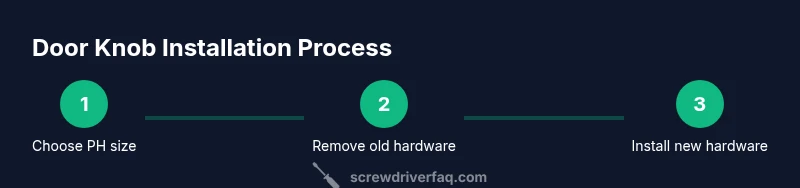
Phillips Screwdriver for Door Knob: A DIY Guide
A practical guide to using a Phillips screwdriver for door knob tasks, from selecting the right size to safe removal and proper installation tips for DIY homeowners.


Learn how to use a Phillips screwdriver for door knob installation or removal. This guide covers choosing the right size (PH0 to PH2), safe handling, latch alignment, and avoiding stripped screws. With the correct bit and technique, most door knob tweaks can be completed in under 30 minutes.
Understanding the role of a Phillips screwdriver for door knob
The Phillips screwdriver is a staple tool for any DIYer tackling door knob work. When you deal with standard residential hardware, the correct PH size ensures smooth engagement with the screw head, minimizes cam-out, and protects the screw and surrounding trim. According to Screwdriver FAQ, using the right Phillips screwdriver for door knob tasks helps maintain torque control, reduces the risk of stripping, and speeds up installation or removal. In practice, a well-chosen Phillips bit also respects the door hardware’s finish by reducing the chance of rounding the screw heads. As you plan, recognize that most door knobs use either PH1 or PH2 screws, with PH0 appearing on some small or specialty hardware. Understanding these sizes sets the foundation for a successful repair or upgrade.
Beyond size, the handle design—short-shaft vs. long-shaft, magnetic tip vs. non-magnetic—affects reach and control. For tight spaces (behind a mounting plate or inside a bore), a compact PH2 bit on a low-profile driver often performs best. When you resist the urge to use a flathead as a substitute, you protect both the screw head and your work surface. The goal is to apply steady pressure, avoid wiggling, and keep the bit fully seated to prevent slippage. For homeowners, investing in a small PH0-PH2 set pays off across many projects, not just door knobs.
To get the best results, inspect the screws and the latch mechanism before touching anything. If screws resist, pause and check for rust, paint, or threads that are cross-threaded. For high-traffic doors, consider upgrading to quality screws and a driver with a magnetized tip to hold screws in place while you position them. The key is to approach each job with a plan: size, fit, alignment, and torque.
noteRightMarginFontSizeNoteEmptyForNowOnlyAllSections7Paragraphs
Tools & Materials
- Phillips screwdriver set (PH0, PH1, PH2)(Include sizes PH0, PH1, PH2 to cover common door knob screws; magnetic tip recommended.)
- Flathead screwdriver (for prying plates if needed)(Only use if you encounter a non Phillips slot or to gently lift components.)
- Allen wrench set (if your knob uses set screws)(Some knobs use hex screws; have variations on hand.)
- Magnetic parts tray(Keeps screws organized during disassembly.)
- Lubricant or penetrating oil(Light lubrication for stiff screws; avoid excess.)
- Soft cloth or microfiber(Wipe surfaces to avoid slips and scratching.)
Steps
Estimated time: 25-40 minutes
- 1
Select the correct Phillips size
Identify the screws on the door knob and choose PH0, PH1, or PH2 based on the screw head. If you’re unsure, start with PH1 and test by seating the bit firmly; a poorly seated bit will strip the screw head. Use a driver with a magnetized tip to keep screws aligned as you begin.
Tip: Starting with the smallest size that seats fully helps prevent over-tightening and cam-out. - 2
Remove the knob faceplates
Position the screwdriver so it sits squarely in the screw head. Apply steady pressure and turn counterclockwise to loosen and remove the screws. If the plate is tight, gently pry around the edge with a thin blade or a plastic shim, avoiding drywall damage.
Tip: If a plate resists, don’t force it; switch to a slightly larger PH size instead of using a flathead. - 3
Separate knob halves
With screws removed, pull the two halves apart carefully. If the mechanism binds, check for hidden screws under decorative caps and remove those first. Keep track of the order of components for reassembly.
Tip: Take photos before disassembly to guide reassembly, especially on more complex knobs. - 4
Remove the latch or spindle (if upgrading)
If you’re replacing the latch or spindle, inspect how the latch is held in place and remove any mounting screws. Some doors require the latch to be slid out along the jamb with gentle wiggling.
Tip: Be mindful of spring-loaded components; keep fingers clear to avoid pinching. - 5
Install replacement parts or reinstall
Insert the new latch or spindle, align the knobs, and tighten screws with the appropriate PH size until snug. Avoid over-tightening, which can strip the screw or crack the trim.
Tip: Tighten in a cross pattern if multiple screws exist to ensure even tension. - 6
Test operation and adjust
Close the door and test latching. If the knob feels stiff or doesn’t catch, re-check screw tightness and alignment. Minor adjustments may be needed to ensure smooth operation.
Tip: If latch alignment is off, loosen screws slightly and reposition the strike plate until the latch engages consistently.
Quick Answers
What Phillips size do most door knob screws use?
Most residential door knobs use PH1 or PH2 screws. Start with PH1 to test seating, moving to PH2 if needed. If a screw is stubborn, inspect for cross-threading or damaged heads.
Most door knobs use PH1 or PH2 screws. Start with PH1 and move up if needed, and check for thread damage.
Can I use a flathead screwdriver on Phillips screws for door knobs?
No. Using a flathead on Phillips screws increases the risk of cam-out and damaging the screw head. Use the correct PH size for best results.
No, use the right Phillips size to avoid damaging the screw head.
What should I do if the screws are stripped?
If screws are stripped, stop and switch to a screw extractor or carefully drill out the screw. Replace with new screws of the same size and thread.
If screws are stripped, use a screw extractor or drill them out and replace with new screws.
Is it safe to use a power drill for this work?
Power drills can over-torque or slip, risking damage to the knob or door. Use a manual Phillips screwdriver for precise control, especially on finishing screws.
Power drills can damage the door hardware; use a manual screwdriver for precision.
How do I maintain a Phillips screwdriver for door knob work?
Keep bits clean and lightly lubricated, store in a magnetic tray, and replace worn bits. A sharp, clean PH bit lasts longer and reduces slipping.
Keep bits clean and sharp, store properly, and replace worn tips to maintain performance.
What if the latch won’t align after installation?
Loosen the screws slightly and reposition the strike plate or latch until engagement is smooth. Re-test before final tightening.
If the latch misaligns, adjust the strike plate and test until it fits snugly.
Watch Video
The Essentials
- Choose the correct PH size before starting
- Secure screws and plates to prevent loss
- Take photos to guide reassembly
- Tighten evenly to avoid misalignment
- Test the latch after installation