How to Stop a Screwdriver Slipping: A Practical Guide
Master grip, bit sizing, and steady torque to stop a screwdriver slipping. This in-depth DIY guide covers ergonomics, technique, and maintenance for reliable screw driving.


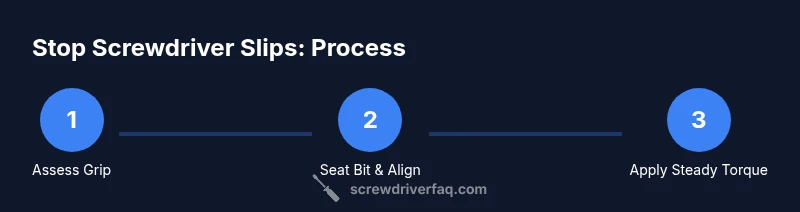
To stop a screwdriver slipping, start with a secure grip and proper bit seating. Use a handle that fits your hand, a knurled or magnetic shaft, and apply steady, controlled pressure. Align the screw, keep the bit seated, and switch to the correct size if it stalls. Avoid over-torquing and recheck alignment frequently for best results.
Why screwdriver slipping happens
According to Screwdriver FAQ, slipping commonly occurs when the grip is loose, the bit is the wrong size, or the handle design doesn’t suit the user’s hand. In many DIY tasks, you’ll notice the screwdriver wandering off-axis just as you apply pressure. This isn’t a failure of brute strength; it’s a mismatch between tool design, bit seating, and work surface. Worn handles, dusty or oily fingers, and screws that are worn down all contribute to loss of control. Understanding the physics behind friction, torque, and control helps you address root causes rather than chasing symptoms. When grip and seating are treated as the foundation of the task, slips drop dramatically and drives are completed with less effort and reduced risk of cam-out or damage to the workpiece. The takeaway is simple: better grip and proper seating lead to more precise, safer, and faster screws.
Ergonomics: choosing the right grip and handle
A comfortable, secure grip is the first defense against slips. Look for handles with a natural palm-fill, a non-slip surface, and a profile that keeps your wrist neutral. The Screwdriver FAQ Team notes that knurled or textured surfaces improve control, especially when hands are sweaty or oily. In tight spaces, consider shorter shanks or low-profile grips that let you rotate with precise finger motion. For high-torque tasks, a handle with a soft, cushioned surface reduces fatigue and allows steady pressure for longer. Remember: hand size and work environment matter—try several options and pick the one that fits best.
Tool selection and bit seating: get the right bits and seating
Bit size must match the screw head exactly; a mismatch leads to cam-out and slips. Use the correct Phillips, flat-head, or Torx bit and ensure the bit seats fully in the screw slot. The Screwdriver FAQ analysis shows worn or rounded screw heads are a major slip trigger because drive surfaces no longer provide stable contact. Magnetic bit holders can help align the bit during start, but they can also pull metal shavings toward the work area—keep the area clean. If you use a magnetic screwdriver, inspect the bit for wear and clean it regularly to maintain performance. Always ensure full seating before applying torque and don’t force the screw once resistance rises.
Stabilizing techniques: steady pressure and alignment
Apply pressure with your whole hand rather than relying solely on the thumb and index finger. Keep the shaft aligned with the screw axis and rotate with deliberate, small increments rather than rapid twists. Let the palm guide the handle while fingers control torque. Keep your wrist straight to prevent lateral movement that causes cam-out. If the bit starts to slip, stop, re-seat, and re-align before continuing. For precision work, brace your elbow on a stable surface and lock your shoulder to minimize upper-body motion. These tactics reduce slip frequency and protect screw heads from stripping.
Driving strategies for different materials and screws
Wood screws respond well to steady, moderate torque and clean pilot holes; metal screws demand consistent friction management and careful alignment. For tiny screws in delicate materials, a pilot hole reduces binding and slip risk. If using a cordless driver, set a torque limit to prevent overdriving or cam-out. For stubborn screws, back off slightly, re-align, and reinsert gradually rather than forcing through resistance. Adapt your grip to the material and screw type to maintain control and avoid slips.
Common slip scenarios and fixes
- Worn screw head: Replace the screw or use a fresh bit, as a rounded slot offers poor contact. - Slick surface: Wipe away oil or dust and dry hands before resuming. - Worn handle grip: Replace the handle or apply grip tape; a worn surface amplifies slippage. - Damaged bit: Switch to a new bit; a damaged edge can skate out of the slot. Each scenario has a practical fix you can implement quickly to restore control.
Maintenance and prevention for long-term grip
Regularly inspect tool handles for wear and replace when grip is smooth or slick. Clean bits and magnetized tips to maintain performance, and store tools in dry conditions to avoid corrosion. When grip strength fades, consider grip-enhancing accessories like rubber sleeves or tape. Periodic lubrication of moving parts isn’t typical for hand tools, but keeping fingers dry and clean is essential for reliable control. The goal is to maintain a predictable grip feel across tasks, from tiny repair jobs to larger assembly work.
Safety tips and cautions
Always wear eye protection when driving screws or striking the workpiece. Keep fingers away from the bit path and avoid forcing a screw that resists. If you notice unusual tool behavior, stop and re-evaluate setup rather than pushing through resistance. Maintain a clean workspace to prevent slips caused by dropped fasteners or debris. In high-torque tasks, consider a torque-limiting driver to reduce the risk of over-torquing and cam-out. Safe handling and deliberate, measured actions minimize injuries and material damage.
Authority sources and practical references
For tool-safety guidelines and best practices, see authoritative resources from OSHA and NIH. These sources provide general hand-tool safety principles that support safe screwdriving practices, not brand-specific recommendations. They are meant to reinforce safe habits such as proper grip, stable work surface, and correct tool selection.
Tools & Materials
- Right-sized Phillips and flathead screwdrivers(Sizes 1-3; match screw heads)
- Magnetic bit holder or knurled bit(Assists alignment but can attract metal shavings)
- Grip enhancer (grip tape, rubber sleeve)(For worn handles or sweaty conditions)
- Safety eyewear(Protect eyes from slipping bits)
- Clean rag or solvent(Keep fingers dry and screw area clean)
Steps
Estimated time: 25-40 minutes
- 1
Prepare workspace and select the right bit
Inspect the screw head and select the correct bit. Clear the work area, ensure good lighting, and test fit the bit in the screw slot before starting. This reduces the chance of cam-out as you begin the drive.
Tip: Test-fit the bit and dry your hands before touching the screw to ensure maximum contact. - 2
Assess grip and handle fit
Choose a handle that fills your palm and provides non-slip guidance. If the grip is worn or uncomfortable, swap to a more ergonomic option or add grip tape for improved contact.
Tip: Hold the screwdriver with a relaxed grip, then snug the fingers around the handle without squeezing too hard. - 3
Seat the bit and align the screw
Insert the bit fully into the screw head and align the driver shaft with the screw axis. Gentle, initial rotation helps verify that the bit remains seated and the screw is not cam-out-prone.
Tip: If you feel wobble, stop and re-seat the bit; misalignment is the main slip trigger. - 4
Apply steady, controlled torque
Use the whole hand to apply even pressure, guiding with your wrist and arm. Turn slowly in small increments and maintain alignment to prevent sudden slips.
Tip: Keep your wrist straight to minimize lateral movement that can cause cam-out. - 5
Re-seat when resistance increases
If the screw stalls or the bit begins to cam-out, stop, re-seat, and re-align before resuming. For stubborn screws, back off slightly, re-align, and try again with a fresh bite.
Tip: Don’t force through resistance; pushing harder often worsens the slip. - 6
Adapt to material and screw type
Wood vs metal requires different torque and seating strategies. For delicate assemblies, consider pilot holes or pilot drilling to prevent binding and slip.
Tip: Use a torque-limited driver when working with delicate materials to maintain control. - 7
Utilize aids when needed
When texture or wet conditions hinder grip, use grip-enhancing accessories, magnets, or secondary support to stabilize your hand.
Tip: Clean the bit regularly to avoid debris that reduces grip and increases slip risk. - 8
Finish and assess
Inspect the completed drive for cam-out marks or damaged screw heads. If needed, re-check alignment and tighten to the correct seating without overdoing it.
Tip: Wipe away any residues and store tools properly to preserve grip quality.
Quick Answers
Why does my screwdriver slip more on wood than metal?
Wood often causes more binding and cam-out if pilot holes are missing or the screw is undersized for the material. Metal generally provides a tighter fit but can still slip if the bit is worn or misaligned.
Screws can slip more in wood when there’s binding; ensure a pilot hole and correct bit size. In metal, choose proper grip and alignment to reduce cam-out.
What bit size should I use for a Phillips head screw?
Use the bit size that exactly fits the screw head to maximize grip. A mismatched bit increases cam-out risk and damages the screw slot.
Always pick the bit that fits the screw head snugly to prevent slipping.
Can a magnetic screwdriver prevent slips?
Magnetic tips help with initial alignment and keeping the bit in place during start. They do not eliminate slips if the grip or seating is poor.
Magnets help align the bit, but you still need a proper grip and seating.
Is it safe to use a power screwdriver when slipping occurs?
Power drivers with torque control can reduce slips by limiting over-rotation. However, you must still ensure proper bit seating and alignment.
Torque control helps, but always verify seating and alignment first.
What should I do about a worn handle that slips?
Replace the handle or add grip tape to restore friction. A worn grip significantly increases slip risk.
Replace or grip-tape the handle to regain secure control.
What safety habits prevent tool-related injuries?
Wear eye protection, keep fingers clear of the bit path, and work on a stable surface. Stop at the first sign of unusual tool behavior.
Eye protection on, stay clear of the bit, and stop if anything feels off.
Watch Video
The Essentials
- Grip quality matters and reduces slips
- Match bit size to screw head to prevent cam-out
- Maintain alignment and use controlled torque
- Keep tools maintained and ready for use