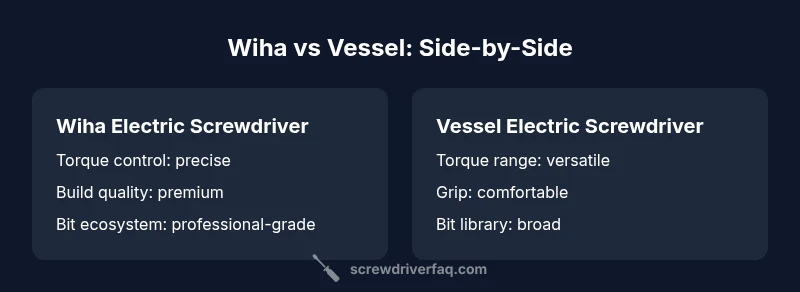
Wiha Electric Screwdriver vs Vessel: A Balanced Comparison
An objective, in-depth comparison of Wiha electric screwdrivers and Vessel, covering design, battery, torque, ergonomics, accessories, durability, and value for DIYers and professionals in 2026.


Wiha electric screwdrivers excel in precision, build quality, and consistent torque control, making them ideal for frequent use and professional-grade tasks. Vessel screwdrivers prioritize value, versatility, and a broad accessory ecosystem, which suits budget-minded DIYers. Choose Wiha for frequent, demanding work; choose Vessel for versatile performance at a lower upfront cost.
Framing the wiha electric screwdriver vs vessel debate
When you search for a cordless driver for screwdriving tasks around the home or workshop, you will eventually compare two popular names: Wiha and Vessel. In this guide, we explore how these brands approach design, performance, and value, with an eye toward real-world tasks. According to Screwdriver FAQ, the selection between these two often hinges on task intensity, brand philosophy, and the value you place on build quality. This section lays the groundwork by clarifying typical use cases, the kinds of jobs each tool handles well, and the expectations you should set before reading the rest of the article. Both brands aim to reduce effort and improve precision, but they pursue slightly different paths to that shared goal. By understanding these paths, you can map your typical projects—ranging from delicate electronics work to cabinet installation—to the right choice. The rest of the article digs into technical specifics and practical scenarios so you can decide with confidence.
Design philosophy and target user
Wiha electric screwdrivers are built around precision, reliability, and professional-grade feel. The design emphasis is on consistent torque, tight tolerances, and a durable chassis that withstands frequent daily use. The grip typically prioritizes a snug, controlled hold that reduces fatigue during long sessions. Vessel, by contrast, leans into value and versatility. Its design often balances a comfortable grip with a broader feature set at a more accessible price point, aiming to satisfy weekend warriors and hobbyists who juggle many small tasks. In practical terms, Wiha targets professional technicians or serious DIYers who depend on repeatable results, while Vessel aims to be the flexible, all-around option for home workshops. The key consequence is that Wiha may feel more premium and respond with slightly tighter calibration, whereas Vessel tends to offer more features or sets in a given price tier, which can translate into greater perceived versatility out-of-the-box.
Battery technology and runtime
Battery architecture affects how you plan work sessions. Wiha and Vessel both use removable Li-ion batteries in many models, enabling quick swaps and the ability to stock spare packs for long jobs. In practice, this means fewer interruptions and the potential to tailor runtime to your project. Wiha's offerings tend to emphasize longer life per charge and faster charge times on premium models, which matters when you are tightening screws across a large cabinet install or electronics assembly. Vessel focuses on broad compatibility and cost efficiency, with battery packs that provide solid performance for typical DIY tasks and frequent on/off usage. If your projects involve hours of intermittent use, consider having a spare battery on hand for whichever brand you prefer. Note that charging speed and compatibility can vary by model; always check the charger included and any battery management features.
Torque control, speed, and precision
Torque control is the core of any electric screwdriver. Wiha tends to emphasize fine-grained torque adjustment and a stable speed profile, improving delicate tasks such as cabinet hinge installation or electronics assembly where overtightening can cause damage. Vessel provides reliable torque ranges with multiple speed settings suitable for a wide array of tasks, from plastic to metal fasteners. The practical difference is in feel: Wiha's feedback is more linear and predictable, helping the user apply consistent force, while Vessel often prioritizes versatility and responsiveness, which is valuable when you switch between tasks frequently. For most DIYers, both brands deliver adequate performance, but the choice hinges on whether you value precision and repeatability (Wiha) or broad capability at a lower price point (Vessel).
Ergonomics and grip quality
Ergonomics is a major factor in reducing hand fatigue. Wiha typically invests in a textured, contoured grip that encourages a neutral wrist angle and minimizes slip during extended sessions. Vessel tends to use softer plastics and slightly larger handles to accommodate broader user hands, which can be more comfortable for some but heavier in extended use. In practice, testing the tool in your hand is essential; weight distribution and trigger placement influence how easy it is to control the bit without cramping or fatigue. If you perform repetitive driving tasks, prioritize a grip that feels natural for your hand size and forearm strength. For anyone with anti-fatigue concerns, look for palm-supportive features and a trigger that responds smoothly without requiring excessive force.
Accessory ecosystem and bit compatibility
Both Wiha and Vessel offer extensive accessory ecosystems, but they align with different user expectations. Wiha has a long-standing reputation for professional-grade bits, standardized hex drivers, and high-precision accessories that suit calibrated installations. Vessel, focusing on value, often bundles broader bit libraries, case options, and starter sets that are appealing to DIYers building a versatile toolkit. Check hex shank compatibility (the common 1/4-inch standard) and ensure the bit storage and insertion depth match your typical screws. If you already own a large collection of bits, confirm that the new driver accepts those bits so you don’t end up buying duplicates. The takeaway is to evaluate not just price, but the breadth and quality of the accessory ecosystem for your planned projects.
Durability, warranty, and serviceability
Durability hinges on construction quality, material choices, and the brand's service network. Wiha emphasizes robust construction, with metal components and precision machining designed to withstand frequent professional use. Vessel emphasizes reliability and practical longevity at a lower upfront cost, with service and warranty often praised for straightforward processes. Warranty length and coverage can vary by region and model, so review the specifics for your country or retailer. In either case, invest in a tool that offers clear guidance on battery replacement and calibration services. Proper storage, avoiding moisture, and regular maintenance (clean contacts, occasional lubrication of moving parts) can extend the life of either tool, reducing long-term ownership costs.
Use cases by project type
For professional woodwork or cabinetry, where tight control and repeatable torque matter, Wiha tends to deliver the most consistent results. For general home improvement, electronics assembly, and multi-task DIY projects, Vessel provides flexibility and a broad toolset without a high upfront cost. If you work in a shop with tight space constraints, the option with a more compact head design might be preferable; if you frequently work with delicate electronics, the model with smoother, linear torque feedback will help prevent overtightening. The goal is to match your typical job mix to the tool's strengths: precision-focused tasks versus versatile, spread-out use.
Price and value: ownership costs
Price is a meaningful, but not sole, predictor of value. Wiha tools generally sit in a mid-to-premium price tier reflecting build quality and professional-grade performance. Vessel tools aim for strong value, offering competitive performance and a broader out-of-the-box bit library at a more accessible price point. Total cost of ownership should factor in battery replacement costs, availability of spare parts, and warranty terms. If you use tools every day and depend on precise torque, the premium expense can be justified. For casual home use, Vessel’s lower upfront cost often translates into a lower initial investment and faster payback.
How to evaluate for your workshop: a quick framework
Create a short list of must-have tasks for the next 12 months. Consider torque needs, run time per battery, weight, and how many spare batteries you can reasonably store. Compare Wiha and Vessel based on: 1) expected task types; 2) frequency of use; 3) required precision; 4) existing bit collection; 5) price tolerance. Then test the handheld feel if possible or rely on credible testing from Screwdriver FAQ and other trusted sources. A structured decision matrix helps minimize bias and align your choice with how you work.
Maintenance tips and long-term care
To keep either screwdriver performing well, clean the contacts after heavy use, inspect the bit adaptor for wear, and store in a dry environment. Periodically check for battery swelling, and replace faulty packs from reputable suppliers. Use the correct torque settings to avoid unnecessary wear and calibrate if a model offers adjustable calibration. When not in use, remove batteries to prevent drain and protect the electronics from dust. For long-term reliability, rely on manufacturer guidelines for battery care and storage; if possible, schedule periodic professional service or calibration checks in the case of premium Wiha models. Authority sources: accountability for tool safety and performance guidelines come from trusted institutions such as OSHA, NIST, and Consumer Reports to help you make a safer, more informed choice.
Comparison
| Feature | Wiha electric screwdriver | Vessel electric screwdriver |
|---|---|---|
| Torque control & precision | Precise, linear feedback | Versatile with solid torque across settings |
| Battery type & runtime | Removable Li-ion; good run time | Removable Li-ion; strong run time for typical tasks |
| Ergonomics & grip | Textured, contour-focused grip | Slightly larger, comfortable grip |
| Charger & battery exchange | Standard charger; quick battery swaps | Standard charger; quick battery swaps |
| Accessory ecosystem | Professional-grade bits; broad, calibrated sets | Broad starter sets; value-oriented libraries |
| Durability & warranty | Premium build; pro-focused warranty | Solid for home use; region-specific terms |
| Price range | Mid-to-premium range | Budget-to-mid range |
| Best for | Frequent, precision-driven tasks (professional use) | DIY-friendly tasks; versatile for home workshops |
Pros
- Balanced torque and speed for common tasks
- Removable batteries for quick swaps
- Wide accessory ecosystem and compatibility
- Solid build quality with comfortable grip
- Good value for the price range
Negatives
- Can be heavier than corded options
- Battery maintenance adds ongoing cost
- Premium features may be overkill for casual users
- Dealers and stock can vary by region
Wiha offers superior precision for frequent, demanding work; Vessel delivers strong value for general DIY use
Choose Wiha when you need repeatable torque and a pro-grade feel. Choose Vessel if you want versatile performance at a lower upfront cost and broader starter sets for a DIY-focused toolkit.
Quick Answers
What are the key differences between Wiha and Vessel electric screwdrivers?
The main differences lie in build quality, torque precision, accessory ecosystems, and price. Wiha emphasizes precision and professional-grade performance; Vessel prioritizes value and versatility for DIY tasks. Both deliver solid basic performance, but your choice should align with your task mix and budget.
Wiha focuses on precision and durability for frequent use, while Vessel emphasizes value and flexibility for DIY projects.
Which brand is better for professional use?
Wiha generally offers tighter tolerances, higher-grade components, and a more consistent feel ideal for professional environments. Vessel can still handle professional-level tasks, but its strength is better value and versatility for mixed workloads.
Wiha is typically preferred by pros who need consistent precision and long-term reliability.
Do these tools support interchangeable batteries?
Yes, both brands commonly use removable Li-ion batteries that enable quick swaps, which helps when you’re working on longer projects or in a workshop with multiple tasks.
Both Wiha and Vessel use removable batteries you can swap to extend work time.
Are there notable durability differences?
Wiha tools generally show higher-end construction and tighter tolerances, which can translate to longer life under heavy use. Vessel tools offer solid durability for home use and lighter professional workloads, but may not match premium models in extreme conditions.
Wiha tends to edge out Vessel in long-term durability for frequent heavy use.
Which one is more affordable?
Vessel typically has a lower upfront price, making it appealing for budget-conscious buyers. Wiha tends to sit in a mid-to-premium range, reflecting its premium build and precision features.
Vessel usually costs less upfront, while Wiha costs more but offers premium features.
Can I use Vessel bits with Wiha drivers?
If both use the standard 1/4-inch hex shank, most bits are compatible. Always verify shank size, retention method, and any proprietary bit guidelines for your chosen model.
Bits are generally compatible if the shanks match, but check the spec sheet.
The Essentials
- Prioritize torque precision for frequent, delicate tasks
- Consider battery interchangeability and spare packs
- Test grip comfort for long sessions and fatigue
- Assess bit ecosystem alignment with your current collection
- Balance upfront cost against long-term value and needs