Insulated vs Non-Insulated Screwdrivers: A Practical Guide
Explore insulated vs non-insulated screwdrivers: safety, performance, and value. Learn when insulation matters, which standards apply, and how to pick the right tool for DIY and electrical work.


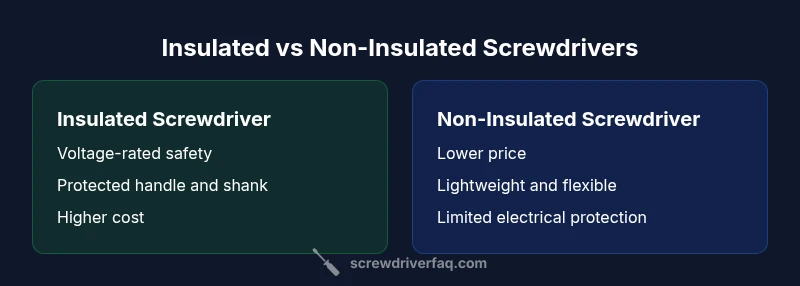
insulated screwdriver vs non insulated: When dealing with electrical work, insulated screwdrivers provide voltage protection and grip safety, while non insulated models focus on torque and accessibility for general tasks. For most DIY homeowners, the insulated choice offers safety around live components, but non-insulated tools can be cost-effective for simple, non-electrical repairs. Understanding the distinction helps prevent shocks and equipment damage.
What insulated screwdriver vs non insulated means
The phrase insulated screwdriver vs non insulated refers to two tool categories that differ mainly in electrical protection and intended tasks. Insulated screwdrivers are built with a plastic or rubberized handle and a layered insulation system designed to endure voltage stress, while non insulated screwdrivers have an uninsulated or minimally insulated handle. In practice, this distinction matters most when you work near live circuits, but it's also a marker of how the tool will perform in everyday use. In DIY projects, understanding the difference helps optimize safety, efficiency, and value.
Electrical safety fundamentals
Electrical safety is not only about voltage; it's about the context of work. Insulated screwdrivers are designed to limit electric shock risk when a circuit could be live. Non-insulated tools offer no electrical protection beyond mechanical integrity. Always treat tools around electrical sources as potentially energized and follow basic safety practices. The most important takeaway is to match the tool's protection level to the task and to inspect tools for damage before each use.
Construction and materials
Insulated screwdrivers typically feature a high-quality thermoplastic or rubberized handle that remains comfortable under prolonged use, plus a shaft made from hardened steel. The insulation layer, often fiberglass-reinforced or a similar composite, extends along the handle and into the shank junction. Non-insulated screwdrivers prioritize a lightweight feel and precise edge geometry for torque and control, but they lack the electrical protection that insulated tools provide. Overall, construction quality directly affects grip, balance, and durability over time.
When to use insulated vs non insulated
- Use insulated screwdrivers for electrical repairs, panel work, or scenarios where a component could be energized. They reduce the risk of shock and arc-related injuries.
- Use non insulated screwdrivers for general mechanical tasks that involve wood, metal, plastics, or when the circuit status is clearly de-energized. They are typically lighter and cheaper, making them ideal for broad household use.
- In mixed environments, prioritize insulation for any task where there is uncertainty about electrical exposure. The right tool choice reduces risk and speeds up work without compromising safety.
Standards, certifications, and quality marks
Quality insulated screwdrivers often carry safety certifications and markings such as UL, CE, or IEC indications that the insulation has been tested to specific safety standards. These marks give users confidence that the tool offers a defined level of electrical protection. Non-insulated screwdrivers rely on basic manufacturing standards for mechanical performance but usually lack electrical safety certifications. When buying, look for clear labeling on the handle or blade that denotes insulation rating and applicable standards.
Performance factors: torque, leverage, and wear
Insulated tools are designed to deliver reliable torque while maintaining a safe barrier between the user and the workpiece. The insulation layer can slightly alter weight distribution and balance, which might affect feel for some users. Over time, high stress or physical damage can compromise insulation, reducing safety benefits. Non-insulated screwdrivers typically provide straightforward torque delivery and durable edges, with less bulk and fewer potential failure points related to insulation.
Cost considerations and value
Price differences between insulated and non-insulated screwdrivers generally reflect the added safety features and certifications of insulated models. For casual DIY tasks, a basic non-insulated screwdriver can be perfectly adequate and cost-effective. If you perform work near live components or in professional settings, the higher upfront cost of insulation is often justified by reduced risk and greater peace of mind. Consider total cost of ownership, including replacement costs if insulation is damaged.
Care, maintenance, and inspection
Inspect insulation for cracks, cuts, or flattening after each use. Do not expose insulated tools to solvents or extreme heat that could degrade material integrity. Clean handles with a damp cloth and dry thoroughly to prevent moisture ingress. Store tools in a dry, organized toolbox to minimize impact damage. Regular inspection helps ensure the insulation remains effective and the tool continues to perform safely.
Choosing the right set: a practical checklist
- Define the primary tasks: electrical work, general mechanical tasks, or mixed use.
- Check voltage rating and see if the insulation aligns with your typical working voltage.
- Assess weight, balance, and handle comfort to ensure steady control.
- Review certifications and warranty coverage, and test the tool if possible before buying.
- Plan for future needs: a small insulated set plus a few non-insulated drivers often covers most scenarios.
Comparison
| Feature | insulated screwdriver | non-insulated screwdriver |
|---|---|---|
| Electrical safety rating | High protection against shock when used correctly | Limited to non-live conditions; no insulation protection |
| Typical use-case | Electrical repairs and live-work scenarios | General mechanical tasks and non-electrical repairs |
| Weight/balance | Slightly heavier due to insulation layers; balanced grip | Typically lighter and simpler feel |
| Cost / value | Higher upfront cost due to insulation and certification | Lower upfront cost and broad availability |
| Durability under mis-use | Insulation can degrade with damage; inspect regularly | Standard durability; insulation not a factor |
| Standards / certifications | Often UL/CE/IEC-rated for electrical safety | Typically basic manufacturing standards |
| Best for | Live electrical work, safety-critical tasks | Non-electrical tasks where budget matters |
Pros
- Enhanced safety when working around live circuits
- Clear indication of intended electrical use
- Better grip and insulation tolerance in wet environments
- Can reduce risk of electric shock during repairs
- Improved confidence for inexperienced users in electrical tasks
Negatives
- Higher upfront cost and potential bulk
- Insulation can wear or crack if damaged
- Not all insulated tools are suitable for high-voltage work
- May be heavier and less maneuverable in tight spaces
Insulated screwdrivers are the safer default for electrical tasks; non-insulated remain the budget-friendly option for non-electrical work
Prioritize insulation for any work involving live circuits. If most tasks are non-electrical and cost matters, non-insulated tools are a sensible alternative.
Quick Answers
What voltages are insulated screwdrivers rated for?
Insulated screwdrivers are rated for specific voltage levels according to safety standards. The rating is indicated on the handle or blade. Do not use a tool beyond its rated voltage and always follow manufacturer guidelines.
Insulated screwdrivers have voltage ratings marked on them; never exceed the rated voltage and always follow the tool's guidelines.
Can I use insulated and non-insulated screwdrivers for the same tasks?
You can perform many non-electrical tasks with either type, but insulation adds protection around live circuits. For purely mechanical work, the non-insulated tool is usually sufficient and more economical.
Yes, but insulation mainly helps around electricity. For non-electrical work, a non-insulated screwdriver is usually fine and cheaper.
What should I look for when buying insulated screwdrivers?
Look for a clear voltage rating, certification marks, warranty, and solid construction. Ensure the insulation covers the entire handle and extends near the shank. Inspect for cracks or damage before purchase.
Check ratings, certifications, and build quality; inspect insulation for any damage before using.
Are there drawbacks to insulated screwdrivers?
Yes. They are typically more expensive and can be bulkier. The insulation can degrade with heavy use or improper care, reducing safety benefits over time.
They cost more and can be bulkier; insulation can wear out if not cared for properly.
How do I care for insulated screwdrivers?
Regularly inspect insulation for cracks, clean handles, and store tools in a dry, organized space. Avoid exposing insulation to solvents or heat that can degrade materials.
Inspect for cracks, keep them clean, and store away from heat or solvents.
The Essentials
- Prioritize insulation for live circuits and safety-critical tasks
- Balance cost, weight, and comfort when choosing tools
- Regularly inspect insulation for damage and replace if compromised
- Use the right tool for the job to optimize safety and efficiency