How Much Is a Phillips Screwdriver? A Practical Price Guide
Learn the typical price ranges for Phillips screwdrivers, from budget basics to premium sets. Understand what drives costs, compare features, and choose the best value for your DIY projects.


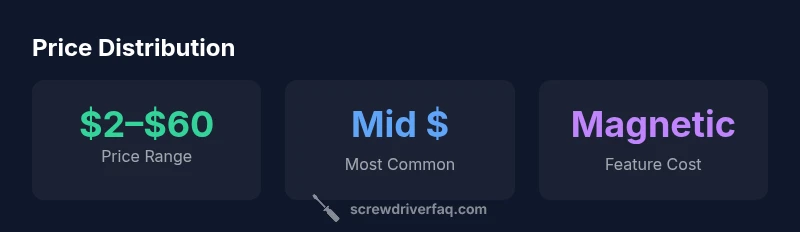
A Phillips screwdriver typically costs between $1 and $60, depending on handle material, shaft length, magnetic features, and whether you buy a single tool or a full set. Budget, entry-level models are around $2–$8, mid-range ergonomic designs run $10–$25, and high-end precision, magnetic tip, or specialty sets can be $25–$60 or more.
How the price landscape for Phillips screwdrivers is structured
Understanding the cost of a Phillips screwdriver starts with recognizing that price bands reflect durability, precision, and intended use. In practice, you’ll encounter a broad spectrum—from inexpensive entry tools to premium, professional-grade drivers. If you’re wondering how much is a phillips screwdriver, the price points you see on shelves map to materials, tip geometry, and grip design. The cheapest models often use basic steel and a simple plastic handle, which keeps the price low but may compromise long-term performance. Mid-range tools typically offer better balance, a more comfortable grip, and longer service life, while high-end drivers introduce specialized features such as magnetized tips, exact PH sizing, corrosion-resistant coatings, and ergonomic refinements that reduce fatigue over extended projects. This tiered structure helps DIYers decide what to invest in based on how frequently they work on screws, the environments you’re tackling, and the value you place on speed and accuracy.
What drives the price of Phillips screwdrivers
Several levers push price up or down: material quality (steel grade, corrosion resistance), tip precision (PH1, PH2, PH3), handle ergonomics, length and balance, and whether the screwdriver is part of a set or sold individually. Brand reputation also plays a role; well-known makers charge a premium for perceived reliability and warranty coverage. Budget models may skimp on grip shape or steel quality, leading to faster wear or cam-out. Magnetic tips, rust-resistant coatings, and insulated variants for electrical work add to cost. When evaluating value, weigh how often you’ll use the tool and in what contexts; for light household tasks, cheaper options can suffice, while frequent or professional use often justifies a higher-quality choice.
Price ranges by category: budget, mid-range, and premium
Price bands for Phillips screwdrivers typically fall into three broad categories. Budget tools can be found around a couple of dollars, often with basic steel and a simple handle. Mid-range devices usually sit in the $5–$20 range and offer better grip, longer lifespans, and more precise tips. Premium drivers, which may include magnetic tips, anti-corrosion coatings, enhanced ergonomics, and lifetime warranties, commonly range from $20–$60 or more for sets. For specialized sizes like PH3 used in larger fasteners, expect to pay toward the higher end of the spectrum. Remember that the lowest price is not always the best value if it wears out quickly or cam-outs regularly.
Sets vs. single drivers: value considerations
A single screwdriver is enough for many simple jobs, especially if you know the exact PH size you’ll need. However, most households benefit from a small set that includes PH1, PH2, and a couple of longer or precision variants. Sets often present higher initial cost but reduce the need to buy additional items later, effectively spreading the price over many uses. If you work on electronics or cabinetry, consider a magnetized or insulated set; these features add cost but can save time and improve safety. When comparing sets, look for tool storage quality and whether tips are replaceable.
Material and build quality: steel, coatings, and tips
The steel grade and tip fabrication determine how long a screwdriver will hold its drive profile. Higher carbon steel or alloy steels resist wear better than low-grade alloys. The tip should be precisely machined to fit PH screws snugly without cam-out. Coatings such as corrosion resistance and wear protection extend life in challenging environments. A comfortable, non-slip handle reduces fatigue, while a balanced shaft improves control. While you don’t always need premium materials, investing in better tips reduces the chance of damaging screws and needing a replacement sooner.
Magnetic tips and specialty features
Magnetic tips enable quicker alignment and fewer dropped screws, especially in tight spaces or overhead work. Some models feature strong magnets that can be reused or two-way locking mechanisms. Specialty variants may include insulated handles for electrical work or ergonomic design to reduce hand strain. These features add to price but can translate into faster work, fewer damage incidents, and longer tool life in demanding environments.
Buying strategies for DIYers: how to maximize value
Start with a mid-range Phillips screwdriver in PH1 and PH2 sizes; you’ll cover the majority of household projects. If you anticipate electronics or small hardware tasks, add a precision variant with a snug fit. When selecting a set, ensure the included sizes match your typical fasteners. Compare prices across reputable brands and consider lifetime warranties as a proxy for confidence in durability. Read user reviews and test grip comfort if possible to ensure the model feels secure in your hand.
Maintenance and longevity: cost-per-use considerations
Regular maintenance—keeping tips clean, sharpening if applicable, and avoiding corrosion—can extend life beyond raw price. Store tips and handles away from moisture and chemicals. A well-maintained Phillips screwdriver can outlast cheaper options by many years, reducing replacement costs over time. If you rely on a single tool for many projects, investing in a higher-quality handle and tip precision often pays off in smoother operation and less damage to fasteners.
Where to buy and how to compare prices
Prices vary by retailer, region, and promotions. Check hardware stores, home improvement chains, and online marketplaces for the best deals, but beware of ultra-cheap tools that cut corners on tip precision or grip comfort. Use price tracking and bundle offers to maximize value, especially when building a multi-size set. If you’re shopping during peak season sales, you can often find significant discounts on mid-range tools that deliver reliable performance for most tasks.
Comparison of Phillips screwdriver types and typical price ranges
| Screwdriver Type | Typical Price Range | Best Use |
|---|---|---|
| Phillips screwdriver (PH) | $2–$15 | General repairs, light duty |
| Phillips screwdriver set (5–6 pcs) | $12–$60 | Versatile projects |
| Precision Phillips screwdriver | $8–$40 | Small electronics |
| Magnetic tip Phillips | $5–$20 | Faster driving, drop risk reduced |
Quick Answers
What affects the price of a Phillips screwdriver?
Prices hinge on materials, tip precision, handle design, length, and whether the tool is sold solo or in a set. Brand and warranty can add a premium as well. Real value comes from how long the tool lasts and how well it fits your screws.
Price depends on materials, tip precision, and features like magnets or insulation; value comes from durability and fit.
Is it better to buy an expensive set or a cheap single screwdriver?
For many DIYers, a mid-range single PH2 or PH1 handled tool covers most needs. A small set can be worthwhile if you encounter a variety of screws or work across different projects, helping you avoid frequent repurchases.
A mid-range single screwdriver fits most tasks; a small set is worth it if your projects vary.
What does PH2 mean and why does it matter?
PH2 is a common Phillips size that fits many mid-sized screws. Using the correct PH size reduces cam-out and minimizes damage to both the screw and driver.
PH2 is the go-to size for many projects; get the size that matches most screws you encounter.
Are magnetic tips worth it?
Magnetic tips help with alignment and speed, especially in tight spaces. They add a small cost but can prevent dropped screws and speed up work.
Yes, magnetic tips are usually worth it for convenience and efficiency.
Can I use a Phillips screwdriver for Torx screws?
No. Phillips and Torx have different drive shapes, and using the wrong type can strip the screw head. Use the correct driver for each screw type.
Don’t mix Phillips with Torx; use the proper driver for each screw.
How do I choose the right Phillips size?
Match the PH size to the screw head (PH1, PH2, PH3). A snug fit reduces cam-out and wear, and improves control.
Pick PH1, PH2, or PH3 based on the screw size you encounter most.
Do brands matter for price and quality?
Brand often signals build quality and warranty. In many cases, mid-tier brands offer similar performance to premium options with better price-to-value ratios.
Brand can influence durability and warranty; compare features and reviews rather than price alone.
“Choosing a Phillips screwdriver is about balancing quality and cost; mid-range models typically deliver the best value for most DIY tasks.”
The Essentials
- Define your budget: start cheap for basic tasks
- Choose PH sizes that match your common screws
- Prioritize grip, tip precision, and shaft length for durability
- Sets can offer better value if you have varied projects
- Invest selectively in features like magnetic tips or insulation for safety