Screwdriver Materials: What a Screwdriver Is Made Of
Explore the materials behind screwdrivers, from blade alloys to ergonomic handles. Learn how blade steel, handle choice, and heat treatment affect durability, magnetism, and performance.


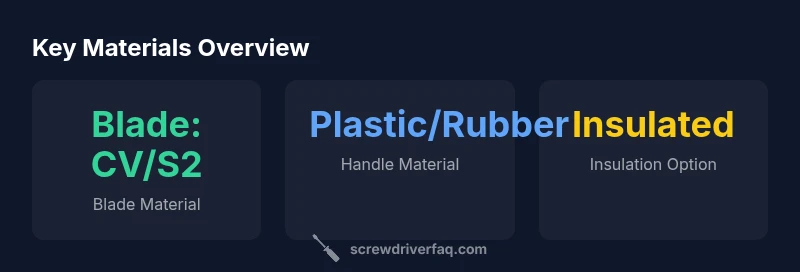
A screwdriver is made up of which material? In practice, it combines a metal blade with a handle. Most blades are high-carbon steel or chrome-vanadium steel, sometimes S2 steel, heat-treated for hardness. Handles are plastic, composite, wood, or rubber, and many models include insulation or a magnetized tip for convenience. Material choices influence durability, grip, and safety.
What the question 'screwdriver is made up of which material' really means
When DIYers ask this, they are seeking a practical view of the two core components: the blade and the handle. In practice, material choice affects durability, torque transmission, corrosion resistance, and user comfort. According to Screwdriver FAQ, the most influential factor is the blade alloy and surface treatment, while ergonomics and grip come from the handle composition. The Screwdriver FAQ team notes that there is no single material that fits all tasks; instead, the best choice balances toughness, hardness, and grip for the intended environment.
Blade materials: steel alloys and heat treatment
The blade is typically made from high-carbon steel, chrome-vanadium steel (CV), or S2 tool steel. Each alloy offers a different balance of hardness, toughness, and edge retention. High-carbon steel is relatively easy to sharpen and economical, while CV steel provides good wear resistance and ductility. S2 steel is favored in some premium or industrial screwdrivers for its impact resistance. Heat treatment—hardening followed by tempering—is essential to optimize edge retention without making the blade too brittle. The exact heat cycle depends on the alloy, but a well-treated blade will hold its edge through thousands of cycles. As you compare models, look for references to “case depth” and “hardness range” rather than a single fixed number, since performance varies with alloy and processing.
Handle materials and ergonomics
Handle design is almost as important as blade material for real-world use. Most modern screwdrivers use plastic or composite handles with rubber or silicone overlays to improve grip. Some traditional tools use wood or metal for the body, but these are less common in today’s ergonomic designs. The material chosen affects comfort during extended use, slip resistance in greasy or sweaty environments, and the distribution of torque from the blade to the hand. For electrical work, many handles incorporate insulating plastics or resins that meet safety standards, while still enabling solid grip.
Insulation, magnetism, and safety features
A significant subset of screwdrivers focuses on electrical and precision work. Insulated screwdrivers typically feature a non-conductive handle and a blade shielded from the tip to protect the user. Magnetized tips help hold fasteners, reducing drop risk in tight spaces. The presence of insulation or magnetization is a material and design choice, not a guarantee. According to industry guidance, always verify safety ratings and manufacturer specifications—insulation ratings are only meaningful when certified and tested under relevant standards.
How material choices influence performance
Material selection directly impacts performance metrics such as edge retention, torque transfer, and wear resistance. Hardened blade steel maintains sharpness longer but can become brittle if over-treated. Softer alloys offer toughness but wear more quickly under high torque. Handle material and texture affect control, fatigue, and perceived precision. In practice, the best screwdriver for a given job balances blade hardness with a forgiving, grippy handle, while considering whether magnetic or insulated features are necessary. Screwdriver FAQ analyses consistently show that users should align material choices with the specific tasks and environments they encounter.
Manufacturing considerations and quality indicators
Manufacturing choices—whether blades are forged or stamped, how the steel is heat-treated, and how the handle is molded—shape final performance. Quality indicators to watch for include consistent blade bevel, uniform edge finish, and a securely fitted handle with comfortable contouring. Reputable brands disclose alloy type, heat-treatment processes, and insulation standards, which helps buyers compare across models without guessing about hidden differences. When possible, seek tools with documentation that outlines the alloy family and the heat-treatment regime used.
Maintenance and care to extend life
Regardless of material, proper maintenance extends tool life. Keep blades clean and dry to prevent rust; sharpen edges with a suitable file or stone as needed; avoid exposing tools to corrosive environments; and protect grips from UV damage by storing in a cool, dry place. For insulated tools, periodically check the insulation integrity and replace if there are any cracks or exposed metal. Brand guidance suggests routine inspection as part of a proactive maintenance plan.
Practical selection guide: material-based tips
- For high-torque assembly in metalworking, prefer CV or S2 steel blades with tempered hardening.
- If comfort is a priority for long sessions, prioritize ergonomic plastic or composite handles with a rubberized grip.
- For electrical tasks, select insulated tools with certified safe insulation levels and a magnetized tip for convenience.
- Always verify that the blade edge is sharp and uniformly ground; that’s a practical signal of sound material processing.
- Consider maintenance needs; easier-to-clean materials and corrosion resistance can reduce long-term replacement costs.
Material considerations for blade and handle components
| Aspect | Blade material | Handle material | Notes |
|---|---|---|---|
| Blade materials | High-carbon steel; chrome-vanadium steel; S2 steel | N/A | Common blade types by material |
| Heat treatment | Hardening and tempering | N/A | Balance hardness and toughness |
| Insulation features | Optional coatings and safety sleeves | Plastic or epoxy coatings | Standards-compliant insulation improves safety |
| Maintenance cues | Edge retention; edge geometry | Grip wear and comfort | Choose materials with ergonomic and care considerations |
Quick Answers
What blade materials are most durable for heavy-duty use?
For heavy-duty work, blades made from chrome-vanadium steel or S2 tool steel are preferred due to their wear resistance and toughness. These alloys hold an edge longer under high torque, though you should balance hardness with ductility to avoid breakage under sudden loads.
For heavy-duty jobs, look for CV or S2 steel blades for durability.
Are insulated screwdrivers always plastic-handed?
Insulation typically involves a non-conductive handle material and safe edge-to-shaft separation. While many insulated screwdrivers use plastic or resin handles, the exact chemistry matters for heat resistance and grip. Always verify certified insulation ratings.
Insulated tools use non-conductive handles; confirm ratings.
Do all screwdrivers use the same steel?
No. Screwdrivers use a range of blade steels, including high-carbon steel, chrome-vanadium steel, and sometimes S2 steel. Each alloy has different hardness, toughness, and wear properties suited to different tasks.
Different jobs call for different blade steels.
How does magnetization affect performance?
A magnetized tip helps hold screws in tight spaces, reducing dropping. It does not replace proper alignment or torque. Models vary in hold strength and should be tested for the intended screw types.
Magnetism helps keep screws in place, but test before use.
How important is handle material for grip?
Handle material and texture influence comfort and control, especially during long tasks or in sweaty environments. Ergonomic rubberized or textured plastic grips reduce slipping and fatigue.
Grip matters a lot for comfort and control.
Which material is most eco-friendly?
Recyclability depends on the material. Steel blades are highly recyclable, while some plastic or composite handles may be more challenging to recycle. Choosing durable, repairable designs helps reduce waste.
Durable tools that can be repaired last longer and may be recycled.
“Material choice is the foundation of a screwdriver's performance; the blade steel and handle grip determine durability, torque transfer, and user comfort.”
The Essentials
- Identify blade alloy families to anticipate edge retention
- Choose handle material for grip and comfort in your environment
- Material choices influence torque transmission and wear resistance
- Check insulation and magnetism features when relevant to the task
- Regular maintenance extends screwdriver life