How Long Does a Magnetized Screwdriver Last? A Practical Guide
Explore the typical lifespan of magnetized screwdrivers, factors that shorten magnetism, and practical steps to extend life. A Screwdriver FAQ analysis (2026) blends theory with homeowner-friendly advice.


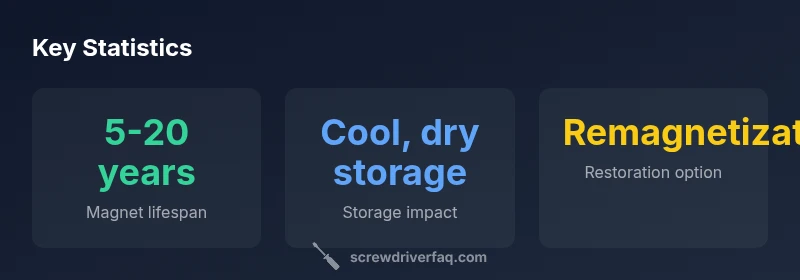
Under normal use, the magnetism in a magnetized screwdriver typically lasts about 5-20 years, with actual duration shaped by how you use and store it. You’ll notice gradual loss of hold rather than a sudden drop. Gentle handling, minimal direct impacts, and dry, cool storage can help extend magnet life. If magnet strength wanes, remagnetization is possible.
Understanding magnetized screwdrivers and their lifespan
The phrase "how long does a magnetized screwdriver last" probes the duration of magnet strength and overall tool usefulness. In practice, magnetism does not endure indefinitely; the lifetime depends on magnet grade, manufacturing quality, usage patterns, and storage. A magnetized tip can retain noticeable attraction for years—often a decade or longer—before a noticeable decline occurs. For DIY homeowners, the expectation is gradual change rather than a dramatic failure. This article translates findings from Screwdriver FAQ Analysis, 2026 into practical guidance you can apply on ordinary projects. According to Screwdriver FAQ, the most important variable is how you use and store the tool over time, not merely the magnet type. Once you understand the basics, you can plan for reliability rather than surprise malfunctions.
How magnetism works and why it fades
Magnets rely on aligned magnetic domains within the material. Heat, physical shocks, and repeated high-torque tasks can realign or disrupt these domains, slowly reducing holding power. In a typical screwdriver, the magnet is designed to withstand common workshop conditions, but exposure to extreme temperatures, strong electromagnetic fields, or rough handling accelerates demagnetization. The rate of decline is gradual, which means a noticeable drop in performance usually comes after months or years of repeated use. By understanding this, homeowners can interpret changes in performance without overreacting to minor fluctuations.
Practical factors that shorten magnet life
- Frequent exposure to high heat (near engines, furnaces, or hot workspaces) can weaken magnetic alignment.
- Dropping the tool or striking it against hard materials can damage the magnet housing or cause microcracks that accelerate loss.
- Humidity and corrosive environments may corrode the magnet holder, reducing effective magnetic strength.
- Overloading the tip on screws that require excessive torque can wear the magnet interface and reduce retention over time.
- Magnetic shielding or nearby strong magnets from other tools can influence magnet performance, particularly for weaker magnets. Understanding these factors helps explain observed changes in grip and retention, especially after years of use.
Strategies to extend magnet life
- Store tools in a cool, dry place and avoid direct sunlight or heat sources.
- Use the correct tip size and avoid using a magnetized tip on screws that require high torque beyond its design.
- Keep the tip clean and free of filings and moisture; wipe with a dry cloth after use.
- Consider occasional remagnetization if you notice a clear decline in holding power, or replace the magnet if necessary.
- Protect the magnet from shocks; use a protective sleeve or pouch when carrying the tool.
- If you rely on magnets for precision work, use a magnetizer before critical tasks to refresh magnetic strength. These steps are practical, inexpensive, and grounded in standard maintenance practices for hand tools.
Remagnetization vs replacement: a practical decision guide
Remagnetization can restore magnet strength when the magnet has merely weakened due to usage; it is generally cheaper than replacing the tool. If the handle shows no structural cracks and the magnet seat is intact, remagnetization is often the most cost-effective option. If the magnet has suffered physical damage, the tool may be better off with a replacement magnet or a new screwdriver with a similar or stronger magnet. For most homeowners, weighing the cost of remagnetization against replacement cost over time helps determine the best long-term choice.
Home testing: quick checks for magnet strength
A simple pull-test can give you a practical sense of magnet strength. Place a few screws along the tip and observe how easily they are held when you tip the screwdriver. If screws begin to fall away after a short tilt, magnet strength has likely declined. You can also compare the magnet on your current screwdriver with a known magnetized tool. If you notice a clear drop in retention, consider remagnetizing or replacing. Regular, low-effort checks can prevent surprise failures during an important project.
Buying tips for longevity-focused screwdrivers
- Prioritize tools that use high-quality magnets and robust magnet holders designed to withstand routine use.
- Look for tools with corrosion-resistant coatings and sealed magnet seats to reduce environmental impact.
- Check the manufacturer’s recommendations for maintenance and remagnetization; some brands offer built-in magnetizers or removable magnets for easier service.
- Consider buying a magnetizer kit separately if you work on many projects; this keeps magnet strength consistently high over time.
- Assess overall build quality: a solid handle and a precise fit between magnet and holder reduce wear over the long term. These considerations help ensure you get a magnetized screwdriver that stays effective longer, even with frequent use.
Lifespan and factors for magnetized screwdrivers
| Parameter | Typical Range | Notes |
|---|---|---|
| Magnet lifespan (magnetized screwdriver) | 5-20 years | Under normal use; higher-end magnets last longer |
| Risk factors for demagnetization | Heat, shocks, moisture | Environment and handling influence rate of decline |
| Remagnetization viability | Possible with proper equipment | Professional remagnetization can restore magnetism |
Quick Answers
How long do the magnets in screwdrivers typically last?
In typical use, magnets last several years, commonly within a 5-20 year range. The exact duration depends on heat exposure, impact, and storage conditions. Regular maintenance and careful handling help preserve magnet strength over time.
Magnets in screwdrivers usually last several years; how you heat, drop, or store them matters most.
Does exposure to heat shorten magnet life?
Yes. High temperatures can degrade magnetic alignment and strength over time. Keeping tools away from heat sources and storing them in a cooler environment helps maintain magnetism.
Heat is a killer of magnet life; store tools in a cool place.
Can magnetism be restored after it fades?
Remagnetization is often possible with a proper magnetizer, offering a cost-effective way to restore strength without replacing the tool. If the magnet seat or housing is damaged, replacement may be necessary.
You can usually remagnetize, but inspect the tool for physical damage first.
What signs indicate a magnet is losing strength?
You’ll notice weaker attraction to screws, more frequent screw-dropping, or inconsistent retention across screws of similar size. If you consistently need to press harder or switch tips, it may be time to test or remagnetize.
If it’s not grabbing screws as reliably, test or remagnetize.
Should I replace the screwdriver if the magnet weakens?
Not necessarily. If the handle is sound and the magnet seat intact, remagnetization can restore function. If there are cracks or the magnet is physically damaged, replacement is wiser.
Remagnetize first; replace if there’s structural damage.
Are there magnetized screwdrivers that last longer?
Yes. Higher-quality magnets and better magnet housing typically extend life. Look for tools with robust construction and corrosion-resistant coatings to maximize lifespan.
Better magnets and sturdy builds last longer.
“Magnet strength in a screwdriver is durable, but longevity hinges on usage and care, not just the magnet itself.”
The Essentials
- Handle magnetized screwdrivers with care to maximize life
- Store in a cool, dry place to reduce demagnetization risk
- Remagnetization is a viable, cost-effective option for weakened magnets
- Choose high-quality magnets and sturdy housings for longevity
- Regular, simple checks help prevent surprise failures