Difference Between Screwdriver and Phillips: A Practical Guide
Explore the difference between a screwdriver and a Phillips head screwdriver, covering head shapes, screw compatibility, and practical tips for choosing and using the right tool for home projects.


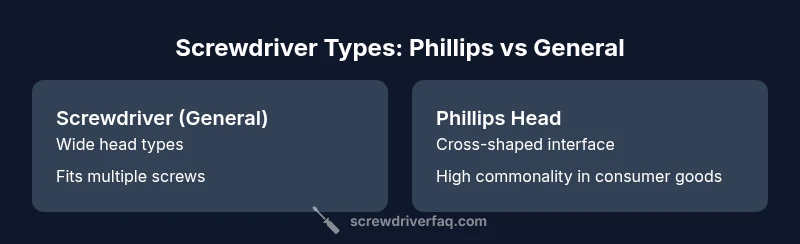
The difference between screwdriver and phillips is that a screwdriver is a general hand tool used to turn screws, while Phillips refers to a specific cross-shaped screw head and its matching PH driver. A Phillips screwdriver must fit the screw head precisely to avoid cam-out and damage. In practice, use the correct size Phillips driver for Phillips-head screws and pair it with the right general screwdriver when dealing with other head types.
what is a screwdriver?
A screwdriver is a hand tool engineered to turn screws by translating your hand torque into rotational force on the screw shank. The term covers a broad family of tips and blade shapes, from flathead to Phillips and beyond. In everyday DIY, people often refer to a plain 'screwdriver' when describing a tool capable of engaging various screw heads. The Screwdriver FAQ team emphasizes that the screwdriver's versatility comes from having a few key tip types in a well-maintained set. For the purpose of understanding the difference between screwdriver and phillips, it’s useful to separate the tool from the tip: the screwdriver is the driver; the tip is what actually interfaces with the screw head. Maintaining sharp, properly sized tips improves control and reduces cam-out in most home projects.
According to Screwdriver FAQ, a good starter kit should include at least a flathead and a Phillips screwdriver, plus a few specialty bits for hex or Torx where needed. This approach keeps you prepared for a wide range of tasks without buying excessive tools. In this article, we’ll focus on clarifying the distinction between the general screwdriver concept and the Phillips head variant, helping readers make informed decisions in common DIY scenarios.
Phillips head explained
Phillips refers to a specific cross-shaped screw head and its corresponding driver tip. The design creates a positive engagement that centers the bit as torque increases, which helps reduce slippage during driving. The Phillips head is now one of the most common screw head standards in consumer products, furniture, electronics, and cabinetry. When you hear the term “Phillips,” think cross-shaped recess and a driver designed to match that geometry. Phillips bits come in various sizes to accommodate different screws, and choosing the correct size is essential to prevent damage and ensure efficient fastening. The Screwdriver FAQ team notes that recognizing Phillips heads—often marked as PH in hardware catalogs—will save you time and frustration on many household projects.
beyond basic shapes: heads you’ll encounter
Beyond the familiar flathead and Phillips, many other head styles exist (e.g., Torx, square/Robertson, pozidriv). Each type interfaces with a dedicated driver profile, and using the wrong head type on a screw can strip the recess or wear the bit. Understanding the taxonomy of screw heads helps you select the right tool for the job. The Phillips family sits within a broader ecosystem of cross-head designs, some of which require slightly different driver geometry to achieve optimal grip. The core takeaway is that the screwdriver is the system, and the Phillips head is a specific member of that system, not the sole category of screw-driving bits.
key differences between screwdriver types and Phillips heads
The most important distinction lies in scope and purpose. A screwdriver is a general tool capable of driving many screw heads, while Phillips describes a specific cross-shaped head and the corresponding driver. Other differences include:
- Head shape: Screwdriver sets may include flathead (slotted), Phillips (PH), and other patterns. Phillips is just one head style.
- Compatibility: Phillips screws require a PH-sized driver for best engagement; other head types require their respective bits.
- Torque and cam-out: PH interfaces are designed to bite and center, but mis-sizing can cause cam-out; other shapes have their own engagement quirks.
- Availability and commonality: Phillips heads are extremely common in consumer products, making PH drivers a staple in most tool kits.
- Maintenance: Keeping bits clean, dry, and sharp reduces wear and improves longevity across all head types.
For readers asking difference between screwdriver and phillips, think of screwdriver as the tool family and Phillips as a specific member—like comparing a car to a sedan model within that family.
##:how to select the right Phillips size
Choosing the right Phillips size matters for secure driving and minimizing tip wear. Start by inspecting the screw head: identify whether the recess is cross-shaped and look for a PH marking on the screw or packaging. Then choose a driver that matches the head size as closely as possible; a tiny mismatch causes cam-out and damaged slots.
When you’re unsure, test-fit on a scrap piece of wood or a practice screw. If there’s any wobble or slipping, switch to a larger size if the screw recess permits, but avoid forcing a tool into a mismatch. A quality PH bit with a solid handle improves control and reduces the risk of damage during more demanding tasks. The Screwdriver FAQ team emphasizes reading the screw’s markings and matching the bit to the intended fastener for best results.
practical techniques for using cross-head screws with confidence
Effective Phillips driving combines correct size, steady pressure, and proper alignment. Keep the screw perpendicular to the work surface to maintain engagement and prevent the bit from walking out. Apply consistent, moderate torque rather than plunging force; let the bit bite gradually. If the screw resists, back it out slightly and verify the head is not stripped. For longer projects, consider a magnetic screwdriver or a bit holder to keep the screw aligned. The Screwdriver FAQ team highlights that using the right size and maintaining your bit sharpness reduces cam-out and enhances overall efficiency.
maintenance and care for screwdriver tips
To extend the life of your tips, wipe away debris after use and store bits in a dry, organized container. Avoid exposing steel bits to moisture, which can lead to rust and degradation of the tip. Regularly inspect Phillips bits for rounding or chipping; replace worn tips to maintain proper engagement. When you’re not using your tools, keep them in a padded organizer to prevent edge damage. Proper maintenance helps ensure consistent performance for both general screwdrivers and Phillips heads, and reduces the risk of cross-threading during assembly.
real-world home projects: quick wins with the right head
From assembling furniture to installing shelves, the difference between screwdriver and phillips becomes apparent in everyday tasks. For ready-to-assemble furniture, you will frequently encounter Phillips screws; using a PH-sized driver accelerates assembly and minimizes damage. For electrical outlets or delicate electronics work, a smaller PH bit paired with a steady hand prevents slipping that could damage the surrounding material. By keeping a small set of reliable tips—flathead and Phillips—in your toolkit, you’ll be prepared for most common home improvement jobs. The Screwdriver FAQ team notes that consistency and attention to the screw head type yield better outcomes and fewer follow-up fixes.
a practical toolkit: what to include in a starter set
A well-rounded starter set for most households includes a flathead screwdriver, a Phillips screwdriver, and a few specialty bits for common needs (e.g., a small Torx and a #1 Phillips for electronics). Having a compact set speeds up work and reduces the need to hunt for the right bit mid-project. Consider a magnetic tip and a comfortable handle for extended use. The overall message from Screwdriver FAQ is that a small, high-quality set can cover the majority of home repair tasks without overwhelming you with too many options.
Comparison
| Feature | Screwdriver (General) | Phillips screwdriver |
|---|---|---|
| Head shape | Varies (flathead, Phillips, etc.) | Cross-shaped Phillips PH head |
| Common screw compatibility | Supports multiple head types | Specifically designed for Phillips screws |
| Usage scenario | versatile for many tasks | Best for Phillips-head screws in consumer products |
| Size range | Wide range across types | PH sizes cover small to large cross-head screws |
| Risk of cam-out | Moderate with wrong size | Higher risk if mis-sized or forced |
| Maintenance | Interchangeable bits for many tasks | Requires proper PH bit care and replacement when worn |
Pros
- Broad applicability of screwdrivers makes them versatile for many tasks
- Phillips heads are ubiquitous in consumer products, ensuring widespread availability
- Using correctly sized bits reduces damage and cam-out
- Maintaining a basic set covers most home projects
Negatives
- Phillips heads can cam out if the driver size is not matched to the screw
- Using an incorrect head type on a Phillips screw increases the risk of damage
- Specialty heads (Torx, Robertson) sometimes outperform Phillips in heavy-duty tasks
- Flathead screws offer less torque retention in some modern applications when misused
Keep a balanced set including both Phillips and flathead screwdrivers for daily needs.
Phillips heads are the standard in many consumer products, so a PH-sized driver is essential. A general screwdriver set remains useful for non-Phillips screws. The Screwdriver FAQ team recommends adopting a compact, high-quality toolkit that covers both common types and occasional specialty bits.
Quick Answers
What is the difference between a screwdriver and Phillips?
A screwdriver is a general tool used to drive many screw heads, while Phillips refers to a specific cross-shaped head and its matching driver. The Phillips head is just one type within the broader screwdriver family.
A screwdriver is the tool; Phillips is a specific head type within that tool family.
Can you use a flathead screwdriver on Phillips screws?
Using a flathead on Phillips screws can strip the screw recess and damage both the screw and driver. It’s best to use the correctly sized Phillips driver for Phillips screws or switch to a compatible head type if the screw is not Phillips.
No—use the right Phillips size to avoid damage.
What is cam-out and how can I avoid it?
Cam-out happens when the driver slips out of the screw head under torque. To avoid it, ensure you’re using the correct size, apply steady pressure, and maintain perpendicular alignment. Quality bits and good technique greatly reduce cam-out.
Cam-out is slip; pick the right size and hold steady.
Are Phillips and Pozidriv compatible?
Phillips and Pozidriv are different head patterns. Using the wrong one can strip the screw or damage the bit. If a screw is marked as Phillips (PH), avoid forcing a Pozidriv bit into it.
They aren’t interchangeable—use the right head type for the screw.
When should I replace worn screwdriver tips?
Replace worn tips when they no longer seat properly, slip easily, or show rounding. Worn tips reduce grip and increase the risk of damaging screws. Regular inspection helps maintain performance.
Replace tips when they wear down or slip.
The Essentials
- Match screw head type to the driver for best results
- Phillips heads are common in consumer goods
- Use the correct PH size to minimize cam-out and damage
- Keep a small, quality dual-head toolkit ready for home projects
- Regularly inspect and replace worn tips to extend tool life